How to Plan Food for a Crowd with Mixed Dietary Needs
Vegetarian, vegan, gluten-free, Jain, nut-free — all at one table. A planning framework for hosts who want everyone to eat well without managing twelve separate menus.
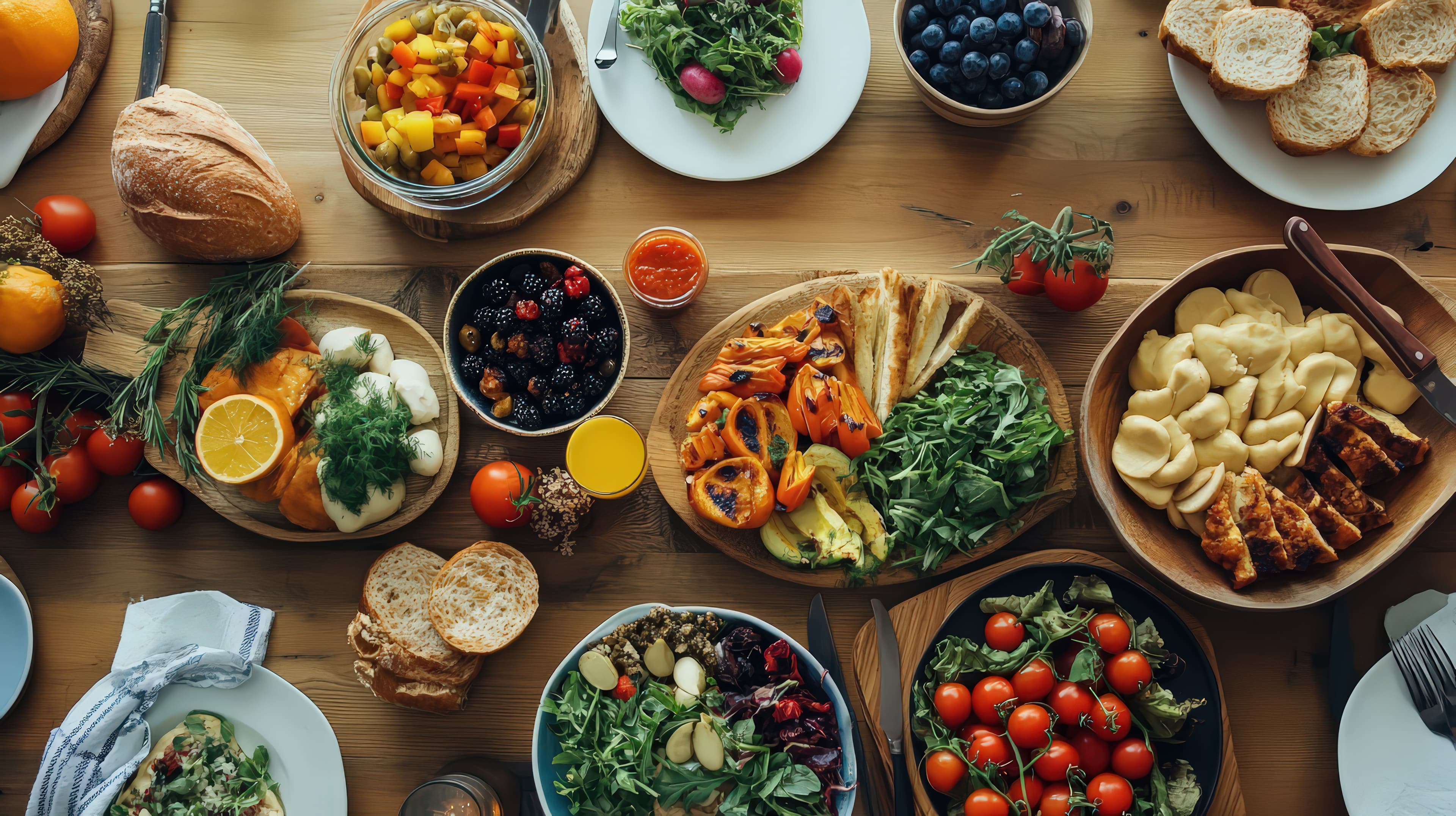
How to Plan Food for a Crowd with Mixed Dietary Needs
The moment your guest list crosses 20 people, the food plan stops being a menu and starts being a logistics exercise. Someone is vegetarian. Someone else is vegan. A family follows Jain dietary guidelines. Two guests are gluten-free. One has a severe nut allergy. Another is dairy-free.
Each of these is entirely manageable on its own. Together, at the same table, they present a planning challenge that most hosts either overthink into paralysis or under-plan into a situation where three guests are eating plain rice and a side salad.
Neither outcome is necessary. The goal is not to create a separate menu for every dietary need. The goal is to design a spread where everyone eats well, nobody feels like an afterthought, and the host isn't managing twelve separate tracks.
Know before you plan
The single most effective thing a host can do is collect dietary information before the menu is finalized — not after. This sounds obvious. In practice, most hosts plan the food first and accommodate restrictions second, which means the accommodations are always add-ons rather than integrated choices.
Asking guests about dietary needs when they RSVP changes the planning sequence entirely. Instead of designing a menu and then subtracting from it for each restriction, the host begins with a clear picture of who's eating what and builds a menu that works for the actual guest list.
The difference is significant. A menu designed around the reality of the table feels intentional. A menu retrofitted with last-minute substitutions feels like exactly what it is — a workaround.
The overlap principle
The key to managing mixed dietary needs without multiplying your workload is to find the overlaps.
A dish that is both vegetarian and gluten-free serves two groups at once. A grain salad that happens to be vegan and nut-free covers three. A well-made dal is vegetarian, can be vegan (skip the ghee for oil), and is naturally gluten-free. The more dishes that satisfy multiple needs simultaneously, the fewer separate items the host needs to prepare or order.
This is not about compromising the menu. It's about being strategic with the dishes that anchor it. If the centerpiece grain dish is naturally free of gluten, dairy, and nuts, a significant portion of the table is already covered — and the host can then add supplementary dishes that serve the rest of the group without the pressure of every item needing to work for everyone.
The practical framework: identify the two or three most common dietary needs on your guest list, and make sure at least half the spread satisfies all of them. The remaining dishes can be more specific.
Vegetarian as the baseline, not the exception
For gatherings where the guest list includes a mix of vegetarian and non-vegetarian guests — particularly in South Asian, multicultural, or mixed-generation groups — the simplest structural decision is to make the core of the spread vegetarian and add non-vegetarian options on top, rather than the reverse.
This is both a practical and a social choice. A vegetarian core ensures that every guest at the table has substantial, satisfying options without needing to navigate around dishes they don't eat. Guests who eat everything lose nothing — there's still plenty for them. Vegetarian guests stop having the experience of arriving at a table where the only things they can eat are a green salad and bread.
This also simplifies the cooking. A rich paneer dish, a well-spiced chickpea preparation, a vegetable biryani, and a robust dal form a complete, satisfying spread on their own. Adding a chicken or lamb dish on the side gives non-vegetarian guests variety without requiring the host to double the complexity of the menu.
The allergy tier
Dietary preferences and dietary restrictions are different categories, and they require different levels of rigor.
A vegetarian guest who accidentally eats a dish cooked in chicken stock will be uncomfortable. A guest with a severe nut allergy who eats something with ground cashews may end up in the hospital. The consequences are not equivalent, and the planning should reflect that.
For allergies — particularly nuts, shellfish, and severe gluten intolerance (celiac disease) — the standard is not just avoidance but awareness. This means knowing which dishes contain allergens, which serving utensils have been used where, and whether cross-contamination is a realistic risk in a shared-platter format.
The practical approach: identify the allergies on your guest list early. For severe allergies, communicate directly with the affected guest about what you're planning to serve — most people with serious allergies are experienced at navigating this and will appreciate the conversation rather than being surprised at the table. Label dishes at the event if the group is large enough that you can't personally walk each guest through the spread.
Jain dietary considerations
Jain dietary guidelines are specific and often unfamiliar to hosts outside the community. The core restrictions — no root vegetables (onions, garlic, potatoes, carrots, beets), no mushrooms, no honey — are straightforward once understood but can eliminate a surprising number of common dishes if not planned for.
The accommodation is simpler than it appears. A Jain-friendly dish needs above-ground vegetables, no alliums (onion and garlic family), and standard cooking methods. A well-made sabzi with seasonal vegetables, a simple lemon rice, a chickpea preparation flavored with cumin, ginger, and green chilies rather than onion and garlic — each of these works within Jain guidelines and is also a dish that any guest at the table would enjoy.
The mistake most hosts make is treating Jain restrictions as exotic. They're not — they simply require building flavor through spice, acid, and technique rather than through the onion-garlic base that most home cooks default to. One or two dishes thoughtfully prepared within these guidelines is sufficient. The entire spread does not need to conform.
Labeling without making it clinical
At a gathering of 30 or more, the host cannot personally guide every guest through every dish. Labels become necessary — but the way they're done matters.
A table full of printed allergy cards and ingredient lists feels like a hospital cafeteria. A simple, elegant approach: small cards or tags next to each dish with its name and, in smaller type, the key identifiers — "vegan," "gluten-free," "contains nuts." This gives guests the information they need to navigate the spread independently, without turning the dining table into a compliance exercise.
For smaller gatherings, verbal guidance works. A brief, natural mention when the food is served — "this one's vegan, this one has dairy, everything on this side is nut-free" — takes ten seconds and covers it.
The principle in both cases: give guests enough information to serve themselves confidently, presented with the same care as the food itself.
Buffet structure
For larger gatherings, a buffet is almost always the right format for mixed dietary needs. It gives guests agency over their own plates rather than forcing the host to manage individual servings.
The layout matters. Group dishes by compatibility rather than by course. All the vegan options in one section, clearly marked. The nut-containing dishes in another area, away from the nut-free options. This reduces the cognitive load on the guest — instead of reading every label on a 15-dish spread, they can navigate to the section that works for them.
If space allows, a separate smaller station for allergy-sensitive options — completely free of the major allergens — is a thoughtful gesture that eliminates cross-contamination risk and gives those guests confidence in what they're eating.
The questions to ask
If you're collecting dietary information on your invitation — and you should be — keep the options simple and relevant.
The categories that cover the vast majority of needs: vegetarian, vegan, gluten-free, nut allergy, dairy-free, Jain, and a free-text field for anything else. Avoid listing every possible restriction — a dropdown with 25 options is intimidating and unnecessary. The free-text field catches everything the predefined options don't.
Collecting this information early does two things. It gives the host a clear picture of what the actual table looks like before a single dish is planned. And it signals to the guest — before they've even arrived — that their needs have been considered. That signal is, in itself, an act of hospitality.
Built into the RSVP
Cordiale collects dietary preferences as part of the RSVP — guests share their needs when they respond, and the host sees the full picture on their dashboard before planning the menu. No follow-up texts, no spreadsheet, no guessing.
Free. Two minutes to set up. Create yours →
More hosting guides: The Art of the Guest List · The 30-Person Problem · How to Plan a Housewarming That People Actually Want to Come To.
Ready to create your invitation?
Pick a vibe and the whole invitation designs itself. Free, no account, no app — for you or your guests.