How to Plan a Housewarming That People Actually Want to Come To
Beyond the invitation — timing, food, flow, the tour question, and everything else that turns a housewarming from an obligation into an evening worth attending.
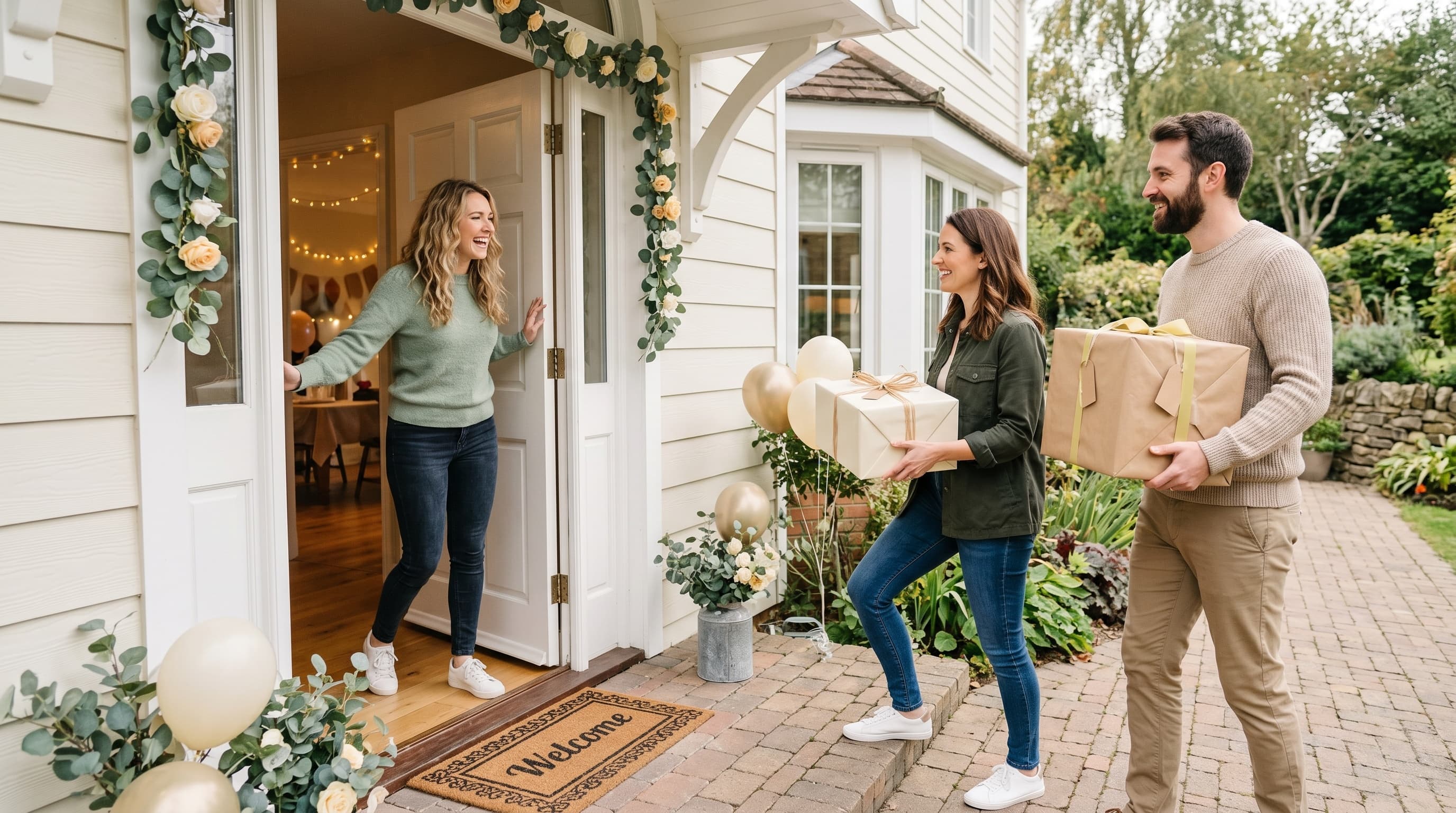
How to Plan a Housewarming That People Actually Want to Come To
Most housewarmings follow the same pattern. The host moves in, unpacks enough to feel presentable, invites everyone they know, and hopes the evening takes care of itself.
Sometimes it does. More often, the gathering drifts — guests arrive, admire the kitchen, eat something, stand in the living room wondering what happens next, and leave after an hour. It wasn't bad. It just wasn't particularly memorable.
The difference between a housewarming that people attend and one they talk about later is not the house. It's the structure. A small amount of intentional planning — in timing, food, flow, and format — transforms the evening from an obligation on someone's social calendar into an event worth showing up for.
Timing matters more than you think
The most common timing mistake is hosting too soon. The impulse to celebrate is natural — you have the keys, the boxes are in, the excitement is real. But a housewarming thrown while the host is still unpacking, still discovering that the oven doesn't work, still missing half their furniture — is an event where the host spends the evening apologizing for the state of things instead of enjoying the company.
Wait until the home feels like yours. Not perfect — perfect is a trap that delays the gathering indefinitely — but lived-in enough that you can welcome people without caveats. The pictures are up. The kitchen is functional. The bathroom has towels. That's enough.
The timing of the event itself matters too. A Saturday evening between 5 and 9 PM is the most forgiving window for a gathering of any size. It's late enough that guests aren't giving up their afternoon, early enough that families can attend without it running past bedtime, and long enough that people can arrive in waves without the host feeling like the evening peaked before half the guests showed up.
Sunday afternoons work well for a more relaxed, open-house format — guests come and go over a wider window, the energy is calmer, and the expectation is lighter. A weeknight evening is a harder sell. Reserve it for a small, intimate group who won't resent the Tuesday commitment.
The format decision
Before planning food, seating, or anything else, the host needs to answer one question: is this a party or a dinner?
The answer determines everything downstream, and most hosts never make the decision explicitly. They plan food that's somewhere between appetizers and a full meal, set up seating that works for neither standing nor sitting, and arrive at an event that's neither casual nor structured.
The open house is the simplest format for a housewarming, especially for a guest list over 20. Guests arrive within a window, help themselves to food, move through the space, and leave when they're ready. The host sets up the food and the space and then actually gets to enjoy the evening. The key is a generous food spread that holds well over a few hours and enough seating for roughly two-thirds of the guests at any given time.
The seated dinner works for a smaller, curated guest list — 12 to 16. The evening has a clear arc: arrival, seating, the meal, dessert. It's more personal, more intimate, and requires more coordination. The host should be comfortable cooking for the group or should have the meal catered.
The hybrid — a structured evening with a buffet meal — fits the 20-to-30 range. There's a food moment that gives the evening a center of gravity, but the format is relaxed enough that guests serve themselves and sit where they like.
Naming the format on the invitation — "open house," "dinner," or simply communicating the food plan and the time window — tells guests what kind of evening they're walking into. Ambiguity about the format is the single most common reason housewarmings feel aimless.
Food that works for the format
The food plan should match the format, not exceed it.
For an open house, the goal is a spread that's substantial enough that guests don't need to eat before they come, varied enough to handle dietary differences, and durable enough to sit out for two to three hours without deteriorating. Think platters, boards, dips, and dishes that are served at room temperature or hold well in a chafing dish. Finger food and small bites work better than plated dishes, because guests are standing and circulating.
For a seated dinner, cook what you cook well. This is not the evening to attempt a new recipe for 14 people. The best housewarming dinners are built on dishes the host has made a dozen times — the ones that feel effortless because they are. Two or three main dishes, a side, bread, and dessert. Nothing performative. The warmth of the evening comes from the company, not the complexity of the menu.
For a hybrid buffet, build the spread the way you would for an open house but with more substance — a main dish, a starch, a vegetable, and a salad, plus appetizers to cover the arrival period. Announce when the food is ready so the evening has a natural pivot point.
In all three formats, dessert should be generous and simple. A well-presented dessert table — sweets, fruit, something baked — gives the evening a closing note and gives guests a reason to linger.
The tour question
Every guest at a housewarming will expect to see the house. The question is whether the tour is the event or a background feature.
For a small gathering, a guided tour works — walk the group through the rooms, share the stories, let people react. Keep it under ten minutes. Any longer and it starts to feel like a showing rather than a celebration.
For a larger gathering, a guided tour is logistically impractical. You can't walk 30 people through a hallway. Instead, make the house explorable. Open the doors to the rooms you're comfortable showing. Let guests wander at their own pace. Most will naturally look around — the curiosity is part of why they came. A few areas can be gently closed off (a bedroom, an office, the room where you shoved all the unpacked boxes) without explanation.
The mistake to avoid: apologizing for the house during the tour. "We haven't finished the guest room yet." "Ignore the paint in the hallway." "We're still looking for the right rug." Every home is a work in progress. Guests are there to celebrate the milestone, not to evaluate the interiors. Show the house with pride, not with disclaimers.
The arrival experience
The first five minutes of a guest's experience set the tone for their entire evening. A housewarming that starts well sustains itself. One that starts with confusion — where to park, which door to enter, where to put a jacket — starts at a deficit.
Three things make the arrival seamless.
Clear directions. A parking note in the invitation or a text to guests the day before — "parking is on the street, enter through the side gate" — eliminates the most common source of arrival friction. If the house is difficult to find, a pin dropped in a group message on the day saves five guests from texting you individually for directions.
An anchored landing. When a guest walks in, they should see two things immediately: the host (or someone who greets them) and the food. Both signal "you're in the right place, the evening is underway, here's what to do next." A guest who walks in and sees an empty room with noise coming from another part of the house feels uncertain. A guest who walks in and sees people, food, and a warm welcome feels immediately at ease.
Something in their hands within two minutes. A drink, a plate with an appetizer, a warm greeting with a gesture toward the food. The worst version of the first five minutes is a guest standing in an entryway with nothing to hold, no one to talk to, and no clear direction. The best version is a guest who's holding something, standing near someone, and already relaxing.
The gift situation
The two most common housewarming gift questions — whether to ask for no gifts and whether people will bring them anyway — both have simple answers.
If you don't want gifts, say so on the invitation. "No gifts, please" or "your presence is the only gift we need" is clear and gracious. It also won't fully prevent gifts — some guests will bring something regardless, because it's how they were raised or because arriving empty-handed feels wrong to them. Accept these gifts warmly. The host who says "you really shouldn't have!" to every gift creates more awkwardness than the gift itself.
If you're open to gifts but don't want to specify, say nothing. The absence of a gift note is understood as "gifts welcome but not expected." Most guests will bring something small — a plant, a candle, a kitchen item, something for the home.
If you'd prefer a specific type of contribution — "bring a dish to share" for a potluck-style gathering, or "bring a dessert if you'd like" — say it on the invitation. Hosts sometimes feel awkward asking guests to contribute, but for a relaxed housewarming, a potluck element can be both practical and communal.
The energy management
A housewarming that runs four hours does not have the same energy for all four hours, and expecting it to is a recipe for disappointment.
The first hour is the warmest — guests are arriving, the space is filling, everything is new. Ride this energy. Be present. Don't disappear into the kitchen.
The middle period is the plateau — the room is full, conversations are established, the food is out. This is the host's easiest stretch, and it's the time to enjoy the evening rather than manage it. If there's a moment for a brief welcome or toast, it belongs here.
The final hour is the taper — guests begin to leave, the group tightens, and the remaining conversations deepen. This is often the best part of the evening, and the host who tries to sustain peak energy through it will feel like the gathering is dying. It's not dying. It's settling. Let it.
The evening should have a natural ending. Clearing the food, dimming the lights slightly, or simply the host's body language saying "this was wonderful, thank you for coming" — all of these signal closure without the awkwardness of asking people to leave.
The invitation that starts it
Everything above works best when the guest arrives with the right expectations — and those expectations are set by the invitation. The format, the time window, the food plan, the address with directions — communicated clearly, designed with intention, and paired with a response mechanism so the host has a real headcount before planning a single dish.
Cordiale builds a designed housewarming invitation with built-in RSVP and dietary collection in under two minutes. The guest responds with one tap. The host plans with real numbers. Create yours →
More hosting guides: The Art of the Guest List · The 30-Person Problem · How to Plan Food for a Crowd with Mixed Dietary Needs. Need wording? Housewarming Invitation Wording: 30 Examples.
Ready to create your invitation?
Pick a vibe and the whole invitation designs itself. Free, no account, no app — for you or your guests.